
Why Some Experts Become the Default Voice of an Industry
Trust, authority positioning and the psychology of becoming the obvious choice
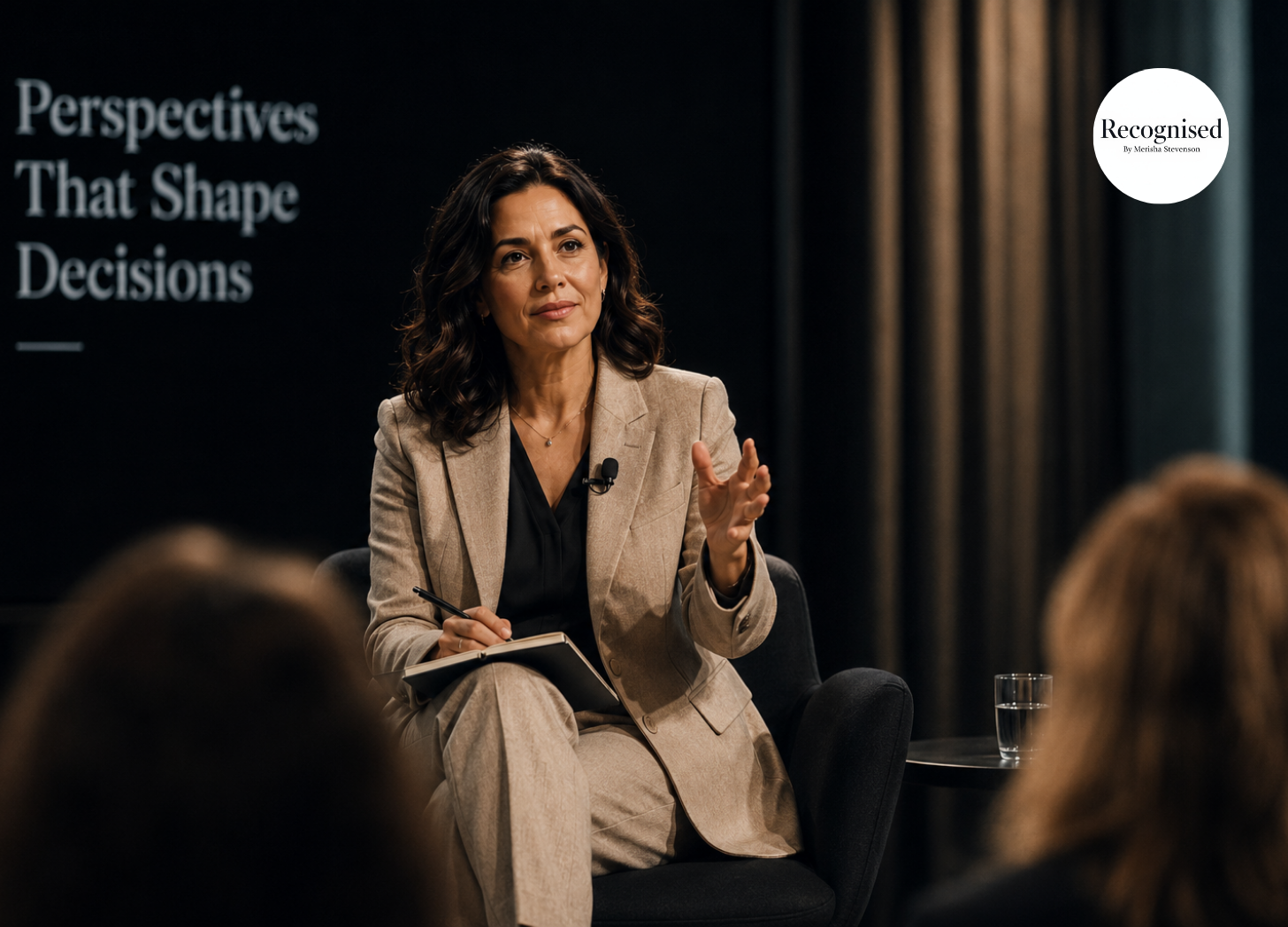
"You stop competing for every opportunity. And instead, opportunities begin competing for your attention."
One of the biggest misconceptions about professional visibility is the belief that opportunities naturally flow towards the most qualified people.
It’s an appealing idea.
It suggests that expertise alone determines outcomes. That the best person eventually rises to the top. That opportunities are distributed according to capability.
The reality is usually far more complicated.
Over the years, both as a broadcaster and as an executive facilitator, I’ve noticed a pattern that repeats itself with remarkable consistency.
The same names appear.
The same contributors are contacted.
The same speakers are invited back.
The same experts seem to become the go-to voices within their industry.
And every time that happens, somebody is left wondering why.
Sometimes that person is less experienced. Sometimes they’re less qualified. Occasionally they’re less effective.
Yet opportunities continue flowing in the same direction.
For a long time, I think we’ve explained this phenomenon poorly.
We tend to reduce it to networking, visibility or luck.
In reality, I think something more interesting is taking place.
The people who become the default voice of an industry are rarely just visible.
They become trusted.
And trust, in many ways, is what authority positioning is really about.
Not creating authority where none exists.
Making existing authority easier to recognise.
The expert who comes to mind first
One of the most influential concepts in behavioural psychology is the availability heuristic, developed by psychologists Daniel Kahneman and Amos Tversky.
The principle is relatively simple.
When people need to make decisions quickly, they tend to rely on information that comes most readily to mind.
In other words, we don’t necessarily select from every available option.
We select from the options we can most easily recall.
This matters because most professional decisions happen under conditions of uncertainty.
A producer needs a contributor for tomorrow’s programme.
A conference organiser is finalising a panel.
A journalist is working to a deadline.
A board is looking for a keynote speaker.
None of these people have the luxury of conducting an exhaustive search of every qualified individual available.
Instead, they work from a shortlist.
And that shortlist is often influenced by recognition.
Not because people are lazy.
Because people are busy.
There is a difference.

Why trust beats talent more often than people realise
When I am booking contributors for a discussion, I am not simply asking myself who knows the most about a topic.
Knowledge matters.
But so does communication.
So does reliability.
So does audience engagement.
So does the ability to explain a complex issue clearly and confidently under pressure.
Likewise, when organisations invite me back to facilitate events year after year, it isn’t because they have forgotten other facilitators exist.
It is because uncertainty has been removed.
They know I can manage a room.
They know I can navigate difficult conversations.
They know I will represent their organisation professionally.
Trust has already been established.
And once trust exists, decision-making becomes easier.
This is an important distinction because many professionals assume authority is primarily built through demonstrating expertise.
In reality, authority is often built through demonstrating expertise repeatedly.
Consistency creates confidence.
Confidence creates trust.
Trust creates opportunities.
Authority positioning is trust made visible
This is why I often think conversations about personal branding miss the point.
The language itself can sometimes make authority feel superficial, as though the objective is simply to become more visible.
Visibility, by itself, is rarely enough.
Authority positioning is something different.
It is the deliberate process of ensuring that your expertise, credibility and value are visible enough to become memorable.
Not because visibility is the goal.
Because recognition is.
The people who become default voices rarely do so because they are constantly promoting themselves.
More often, they have created a clear and consistent association between themselves and a particular area of expertise.
Over time, that association becomes easier to recall.
And what is easier to recall becomes easier to recommend.
The role of social proof
Psychologist Robert Cialdini identified social proof as one of the key principles influencing human decision-making.
Put simply, when we see other people repeatedly choosing something, we tend to assume there is a good reason for it.
The same principle applies professionally.
When somebody appears regularly on industry panels, contributes to media conversations, hosts significant discussions or is repeatedly invited into influential spaces, those appearances begin to act as signals.
The market interprets those signals.
People begin to think:
“If others trust this person, perhaps I can too.”
That isn’t always rational.
But it is profoundly human.
And authority has always been as much about perception as capability.
The opportunity many experts miss
One of the challenges I see repeatedly is that people assume opportunities are isolated events.
A podcast appearance.
A speaking engagement.
A media interview.
A panel discussion.
In reality, these opportunities are rarely isolated.
They are cumulative.
Every appearance is an opportunity to reinforce authority.
To strengthen an association.
To make yourself easier to remember.
Or, unfortunately, easier to forget.
Because authority positioning does not simply determine whether opportunities arrive.
It often determines whether they arrive again. When a leader or specialist steps into public commentary, interviews or keynote panels, systematic media readiness ensures that the authority position holds under scrutiny — turning one-off exposure into cumulative credibility.
The experts who become default voices understand this instinctively.
Every appearance becomes evidence.
Every contribution strengthens trust.
Every opportunity reinforces recognition.

Becoming the obvious choice
The default voice is rarely the loudest voice in the room.
Nor is it always the most qualified.
More often, it is the person who has accumulated enough trust, familiarity and authority to become the safest professional choice.
Which means the real challenge isn’t becoming known.
It is becoming known for something specific, credible and valuable enough that people think of you when opportunities arise.
Because when they do, something interesting happens.
You stop competing for every opportunity.
And instead, opportunities begin competing for your attention.
Become easier to recognise, trust and choose
The Commercial Authority Review identifies the gap between the expertise you already possess and the authority signals the market currently receives.

Merisha Stevenson
Merisha Stevenson is a BBC broadcaster, executive facilitator and strategic moderator, and the founder of The Commercial Authority. Her work focuses on authority positioning, leadership communication, reputation and the relationship between expertise, recognition and commercial opportunity.
Related Insights
The Commercial Authority Gap
Why expertise, visibility and commercial recognition do not always align, and how to identify the gap between capability and market authority.
The Translation Gap
Why complex expertise becomes commercially difficult to recognise, remember and recommend, and why clarity is central to authority positioning.
Are You a Peer or a Project?
Why powerful networks and impressive rooms do not necessarily create authority, and the difference between being valued, recognised and chosen.